
البرمائيات
…
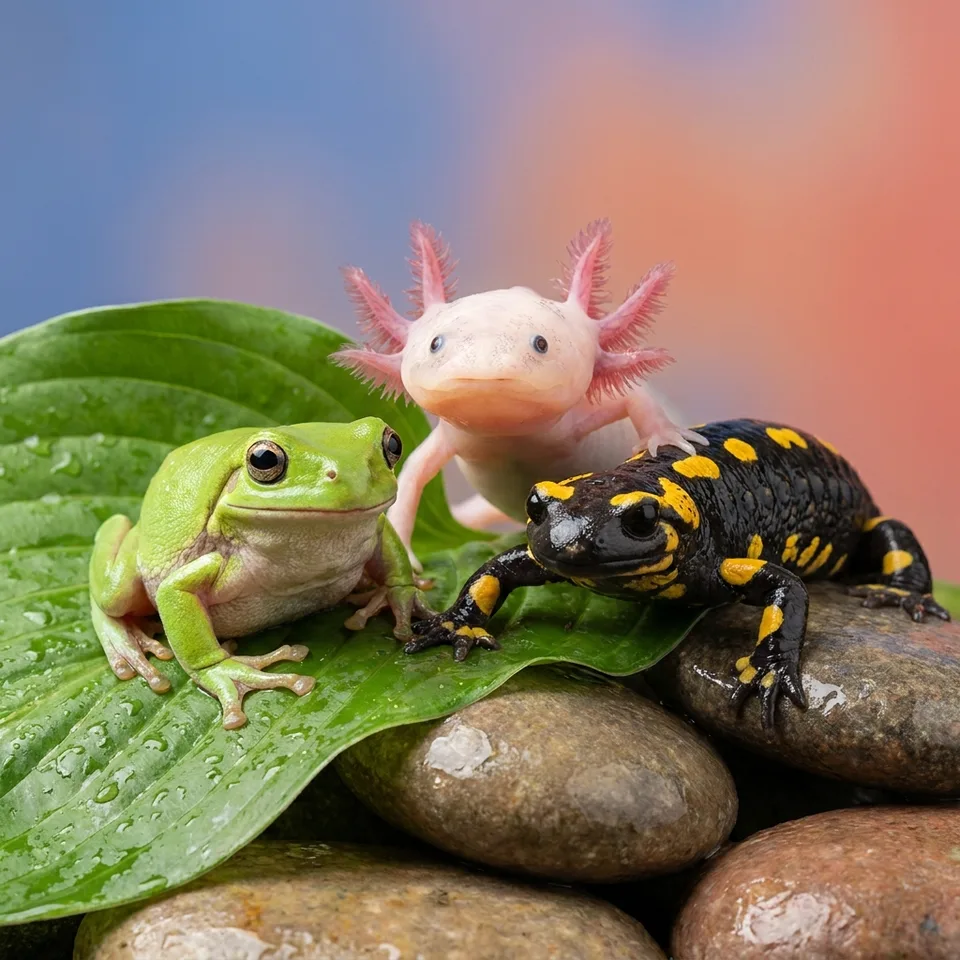
Amphibians live a double life between water and land, and their permeable skin — which breathes and drinks — makes them the most environmentally sensitive pets you can keep and a living barometer of water quality. From a thumbnail dart frog to a foot-long axolotl, they are almost entirely look-don't-touch: oils, salts and soap on human hands cross that skin readily, so handling is minimal and always with wet, clean, powder-free gloves. Water is everything. Dechlorinated, correctly-cooled water and stable humidity prevent most problems; axolotls in particular need cool, filtered, gravel-free tanks and suffer in tropical heat. Feed live or frozen invertebrates suited to the species, and research toxicity and origin — captive-bred dart frogs are non-toxic, wild-caught imports carry parasites and stress. Quiet and often long-lived, amphibians reward patience and precise husbandry over hands-on interaction. Take that skin seriously, because it is a direct route into the bloodstream: whatever an amphibian sits in, it absorbs. Use only dechlorinated water, and keep soap, hand sanitiser, lotion and perfume away from the animal and from anything that enters its enclosure. If you truly must move one, wet your hands in its own water first, or use clean powder-free gloves, and make it a matter of seconds. Better still, herd it into a cup. Most amphibians want it cooler than people expect. A tropical frog is content at 22–26°C (72–79°F); many temperate salamanders and newts want 15–20°C (59–68°F); an axolotl needs 15–18°C (59–64°F) and starts to fail above 22°C (72°F). Heat, not cold, is what kills amphibians in captivity. Sizes and lifespans run wide: a dart frog is 2–5 cm and lives 8–15 years in a 45 cm planted vivarium; an axolotl reaches 25–30 cm, lives 10–15 years and needs 75–110 litres (20–30 US gal) of cold water. These are not short commitments. There is a conservation dimension as well. Amphibians are the most threatened class of vertebrates on Earth, and the chytrid fungus — spread in part by the animal trade — has driven whole species to extinction. Captive-bred is the right answer; wild-caught is not. Quarantine any new animal for a month, never release an amphibian or its tank water into the wild, and find a vet who actually treats amphibians before you need one, because most clinics do not.