
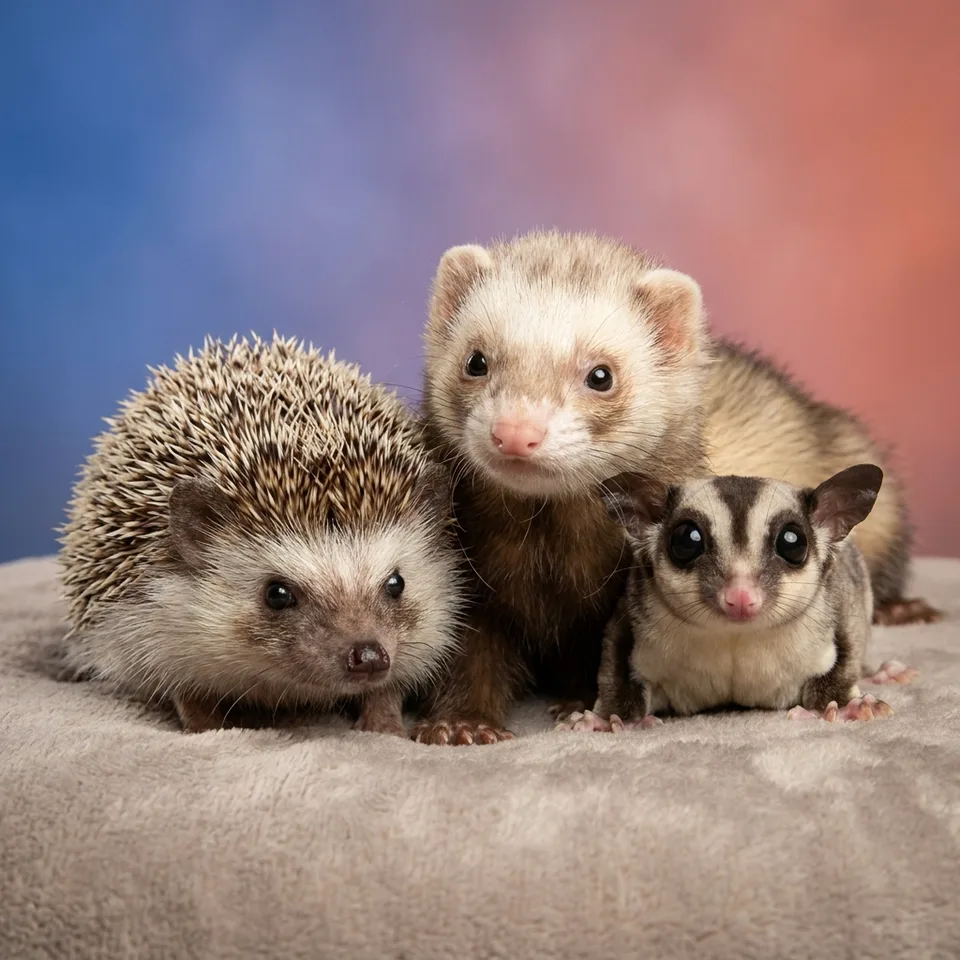
حيوانات أليفة غريبة
…
The exotic mammals — fennec foxes, wallabies, marmosets and their kin — are the deep end of pet-keeping: captivatingly intelligent, powerfully bonded to their people, and utterly unlike the domesticated species most owners know. Almost none are truly domesticated; they keep wild instincts, wild diets and wild energy, and thrive only for keepers who build their whole routine around the animal. Three checks come before any purchase, and they are non-negotiable: legality (permits and outright bans vary by country, state and city), an exotics vet within reach who will actually treat the species, and an honest look at 15-plus years of specialized diet, enrichment and — for social species — companionship. Done right, with spacious enclosures, species-correct nutrition and daily engagement, these are extraordinary companions. Done casually, they suffer. This is expert-level animal-keeping, and the reward matches the responsibility. That last sentence needs a caveat the trade will never give you: for much of this category, the honest answer is simply don't. Most exotic mammals sold as pets are wild animals, or a handful of generations from wild, and a large share of the trade is still supplied by wild capture. The animal you meet in a shop is a survivor of a chain that killed most of the ones who set out with it. Captive breeding does not erase wild needs; it only changes where the animal was born. The rest of the truth is what happens next. Most of these animals are surrendered, usually within the first two years, when a charming juvenile matures into a territorial, scent-marking, biting adult that no longer wants to be held. Sanctuaries are full and turning animals away, and a wild species raised in a house usually cannot be released. Legality varies by country, state and city, it changes, and we cannot tell you what your rules are — check them yourself. Then ask the harder question, because legal and ethical are not the same thing: can this animal have a good life with you? For some small exotics, kept properly, the answer is yes. For a fox, a raccoon or a primate it is almost always no — and deciding not to is a real, kind and entirely respectable answer.