
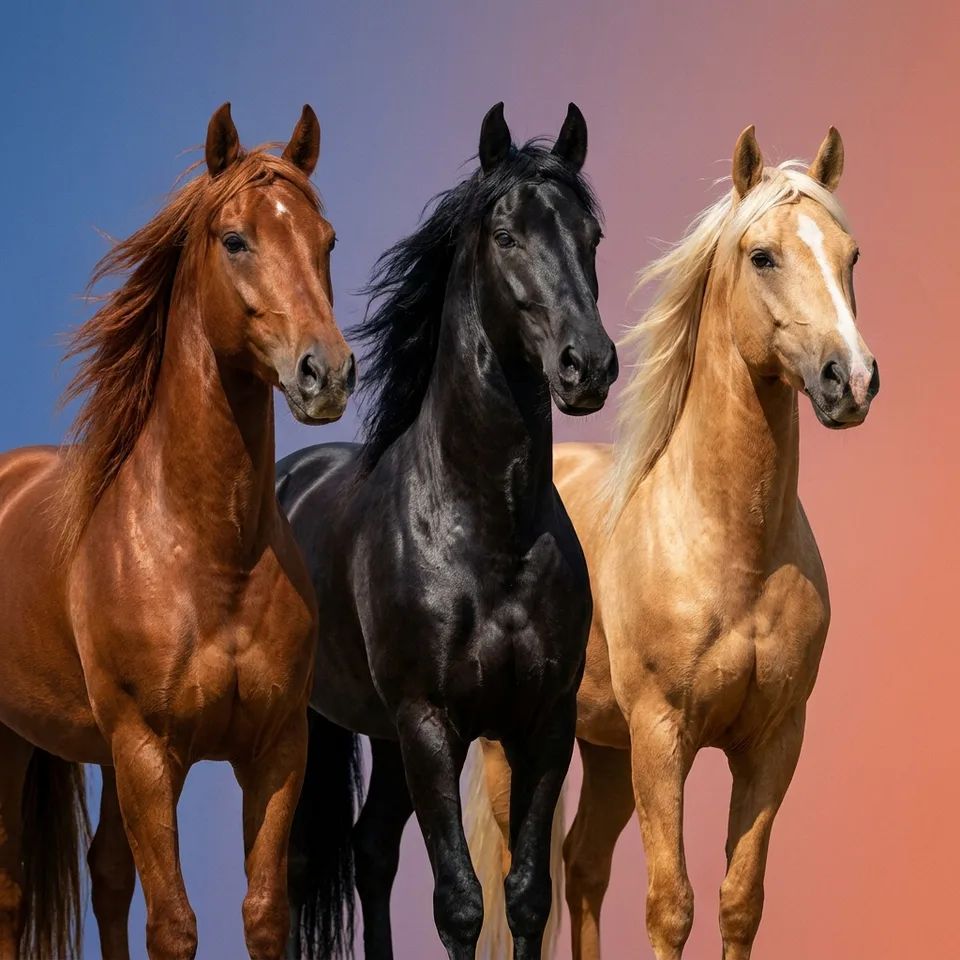
الخيول
…
Humans and horses have shaped each other for over 5,000 years — no animal did more to move people, plough fields and win wars, and even now the horse is the ultimate partnership animal, sensitive enough to read a rider's shift of weight and honest enough to mirror their mood. Every breed here traces to that bargain, from 90 cm miniatures to Shires near a tonne, from desert Arabians bred for endurance to draft giants bred for pull. A horse is the largest commitment in this catalog: they are herd animals that need equine company, daily turnout and movement, acres or careful management of grazing, and a budget for farriery every six weeks, annual dental floating, vaccination and worming. Two rules underpin all horse health — the gut and the feet. Their one-way digestive system makes colic a genuine emergency, so steady forage (grass and hay) and constant fresh water come first; and because they carry half a tonne on four small hooves, obesity and the laminitis it triggers are the commonest preventable disease. Get grazing, forage and hoof care right and a well-kept horse is a partner for 25 to 30 years. Learn to recognise colic before you meet it. A horse that is pawing, looking at or kicking its own belly, lying down and getting up repeatedly, rolling, sweating without having worked, standing stretched out, off its feed, or passing no droppings is telling you its gut is in trouble. Horses cannot vomit, and a gut can twist. That is a ring-the-vet-now event at two in the morning, never a wait-and-see-until-breakfast one. The same urgency applies to a horse that will not put a foot to the ground, a deep wound near a joint, or an eye held shut. Call early; your vet decides what happens next. Be honest about the scale. A horse cannot be left alone for a weekend: someone competent must see, feed, water and check it every day for twenty-five years or more, including the days you are ill, working late or away. It needs the sight, smell and company of other horses; a horse kept alone is not stoic, it is stressed. The purchase price is the smallest number involved: livery or land, hay through the lean months, a farrier every six to eight weeks whether the horse is ridden or not, dental checks, vaccination, worm counts, and a fund for the emergency that eventually comes. Before you buy, loan or share one for a season and learn what a wet winter feels like. Rescue charities have sound horses of every age; have a vet examine any horse before money changes hands, and check what your local rules ask of a keeper.