
اللافقاريات
…
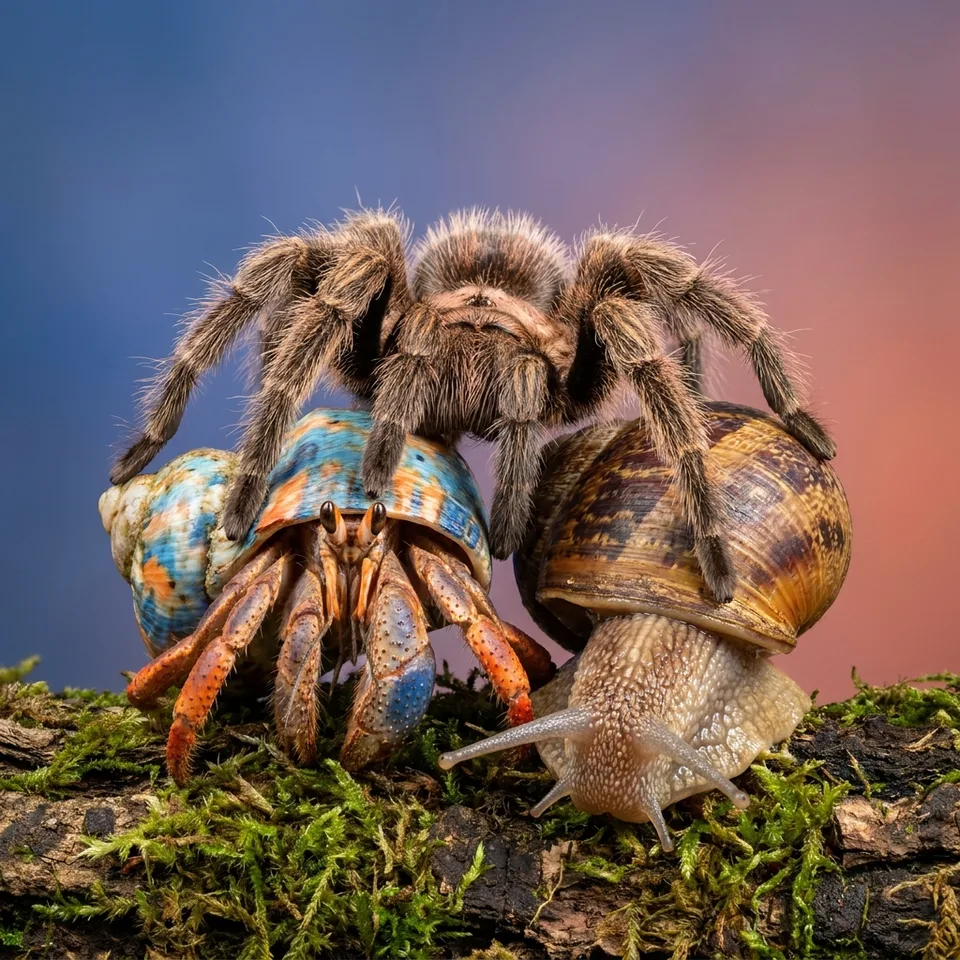
The invertebrate hobby is animal-keeping distilled to its strangest and most affordable: a tarantula, a mantis or a colony of isopods costs little, takes up a shoebox of space, and opens a window onto 400 million years of evolution. These are watch-don't-cuddle pets — most are handled rarely or never — but their behaviour is mesmerizing, from a tarantula sealing itself in silk to moult, to a mantis striking in a twentieth of a second. Husbandry is small-scale but exacting: the right humidity and ventilation, correct temperature, and appropriately sized live prey are everything. Research two things before buying — venom and legality. Old World tarantulas and scorpions carry more potent venom and faster tempers than New World species, and some invertebrates are restricted or illegal in parts of the world. Kept correctly, many females live surprisingly long — a Chilean rose tarantula can reach twenty years. Get the enclosure right and most of the work is done. Too big is as dangerous as too small: a spider that cannot find its prey will not eat. Allow about three times the leg span in floor width and keep terrestrial enclosures low — a heavy-bodied adult tarantula that falls even 20 cm (8 in) can rupture its abdomen and die. Burrowers need 10–15 cm (4–6 in) of substrate to dig into; arboreal species want vertical cork bark instead. Moulting is the critical, vulnerable event in an arthropod's life. A spider that stops eating, goes dull, seals its burrow or lies on its back is not dying — it is preparing to shed. Remove uneaten live prey at once, because a cricket can chew a soft, defenceless spider. Do not feed, do not disturb, do not panic: most first-time keepers who lose an animal lose it by intervening. Be accurate about venom rather than frightened of it. Most hobby tarantulas sting about like a bee, though their urticating hairs itch for days and are serious in the eyes. Some Old World tarantulas and some scorpions — the thin-clawed, thick-tailed buthids above all — are genuinely medically significant, and a beginner should not start there. Females of many species live 15–25 years; males rarely see two years of adulthood. Isopods and snails, meanwhile, are cheap, hardy, genuinely educational starter invertebrates. Just check the law first: giant African land snails are illegal in many places.